
Explore Bir Billing: a valley of flight and refuge.
A complete guide to Bir Billing — where it is, how it became a Tibetan settlement and a world-famous paragliding site, the tourism it offers, when to visit, and how to get here.
What is Bir Billing?
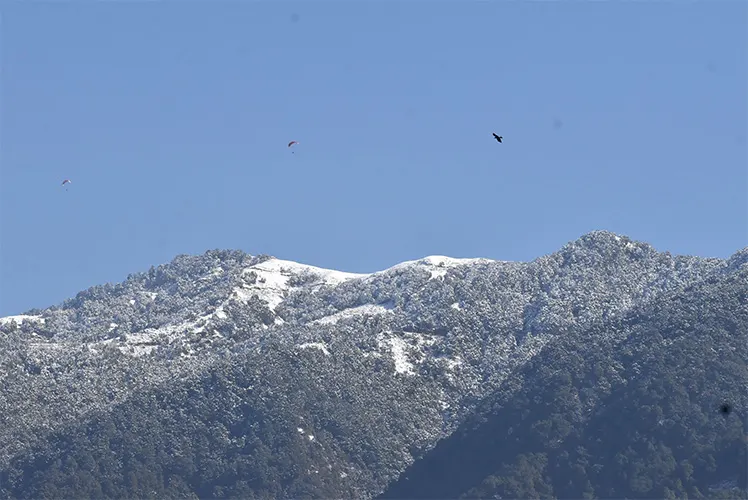
To explore Bir Billing properly, it helps to know it's actually two places, ten kilometres apart, that together form one destination. Bir is the village at roughly 4,600 feet, home to a Tibetan settlement, a handful of monasteries, tea gardens, and most of the homestays and cafés travellers stay in. Billing is the launch site above it, at close to 8,000 feet, where paragliders take off with the Dhauladhar range as a backdrop.
The combination is unusual: a working Tibetan colony with monasteries and prayer flags sitting below one of the highest and most consistent paragliding launch sites in the world.
It's why anyone who chooses to explore Bir Billing tends to fall into one of two groups, thrill-seekers chasing airtime, and slower travellers drawn to its Tibetan Buddhist culture, pine forests, and quiet mountain pace.
Administratively, Bir Billing falls under the Baijnath tehsil of Kangra district in Himachal Pradesh, in the Kangra Valley just south of the main Dhauladhar ridge. The nearest towns of any size are Baijnath and Palampur, both under an hour away by road.
Today, Bir also has a growing population of remote workers and long-stay travellers, drawn by reliable internet, a low cost of living, and the same clean mountain air that makes it good for flying. It's common to find co-working cafés alongside decades-old monasteries — a small, layered town that rewards a slower visit.
From Tibetan refuge to global flying destination
Bir's modern story begins in 1959, when the Chinese annexation of Tibet forced thousands of Tibetans, including senior lamas and their monastic communities, into exile across the Himalayas. The Indian government allotted land in Bir to Tibetan refugees, and over the following years a settlement took shape — a Tibetan colony with its own monasteries, schools, and handicraft centres, still active today in Chaugan.
Among those who settled here was the 3rd Neten Chokling Rinpoche, a senior lama of the Nyingma school, who established what is now Chokling Monastery in Bir in the 1960s to keep his lineage's teachings alive in exile. Other monasteries followed nearby, and Bir gradually became one of the more significant Tibetan settlements in India outside Dharamshala.
Paragliding arrived separately, and much later. From the 1980s onward, pilots began exploring the ridge above Bir and discovered Billing's combination of altitude, thermals, and long, reliable flying season — conditions that are genuinely rare. Word spread through the international paragliding community over the following decades.
That reputation was cemented in 2015, when Bir Billing hosted India's first-ever Paragliding World Cup, bringing over a hundred of the world's top pilots to the valley and putting it firmly on the global map — often cited since as one of the best paragliding sites on earth. The event, and others that followed it, transformed the valley into a genuine international adventure-travel destination, without displacing the Tibetan community that had shaped it for decades before.
Best time to visit Bir Billing
Bir Billing can be visited year-round, but when you go changes what your trip looks like. Paragliding depends on wind and thermal conditions, which follow a fairly predictable seasonal pattern in the Kangra Valley.
March to June is generally the strongest window: winds are stable, skies are clear more often than not, and Himalayan views are at their sharpest before the pre-monsoon haze sets in. September to November is the second prime window — post-monsoon skies are exceptionally clear, and this is also when Bir Billing has hosted its Paragliding World Cup events.
The monsoon (July–August) brings heavy rain and frequent flight cancellations. Winter (December–February) is quieter and often beautifully clear for sightseeing, but flying days are fewer — better suited to travellers prioritising the Tibetan colony and mountain views over guaranteed flight time.
| Season | Months | Good For | Rating |
|---|---|---|---|
| Spring | March – June | Best paragliding window, clear valley views | Best Time |
| Post-Monsoon | September – November | Clearest skies, World Cup season | Best Time |
| Winter | December – February | Sightseeing, cafés, fewer flying days | Good, Limited Flying |
| Monsoon | July – August | Lush greenery, but frequent rain & flight pauses | Avoid for Flying |
Places to Explore near Bir Billing
From the peaceful place of Bir to the mountain views of Billing, discover the places that make this little Himachali destination worth slowing down for.
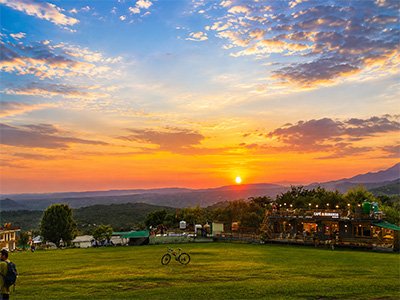 6,500 FT📍
Bir
The heart of the valley, Bir is known for its Tibetan monasteries, cosy cafés, local markets and laid-back mountain atmosphere.
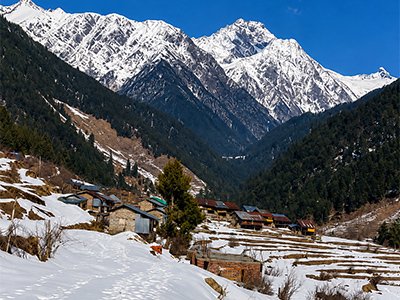 8,850 FT📍
Rajgundha Valley
Escape into the quiet beauty of Rajgundha Valley, a remote mountain destination surrounded by green meadows, forest trails and dramatic Himalayan views.
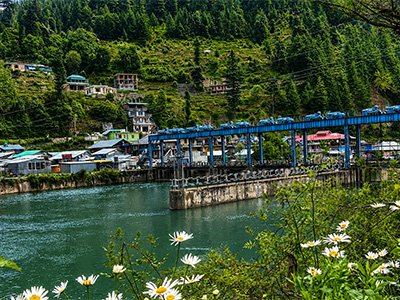 1,829 M📍
Barot Valley
Explore Barot Valley for riverside walks, peaceful villages, pine forests and a slower mountain experience away from the usual tourist routes.
6,500 FT📍Bir
The heart of the valley, Bir is known for its Tibetan monasteries, cosy cafés, local markets and laid-back mountain atmosphere.
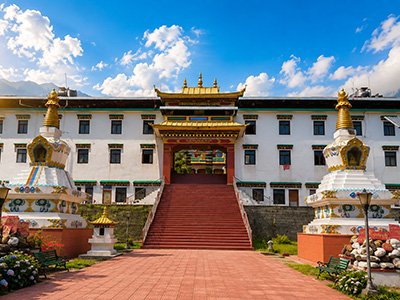 500 M📍
Chougan & Tibetan Colony
Spend a relaxed afternoon around Chougan and the Tibetan Colony, where cafés, monasteries, local culture and views of the Dhauladhar come together.
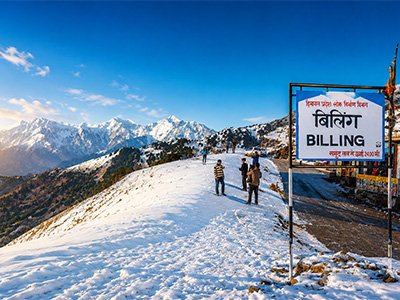 16 KM📍
Billing
Head uphill to Billing, the famous take-off point above Bir and one of the best places to experience the Himalayan landscape from a different perspective.